Mortgage insurance · Free download
PMI Cancellation Request Prep Worksheet
Organize the loan dates, balance, payment history, and property-value questions relevant to a borrower-requested PMI cancellation inquiry. PMI and escrow are separate payment components.
2 pagesNo email requiredEditable + printable
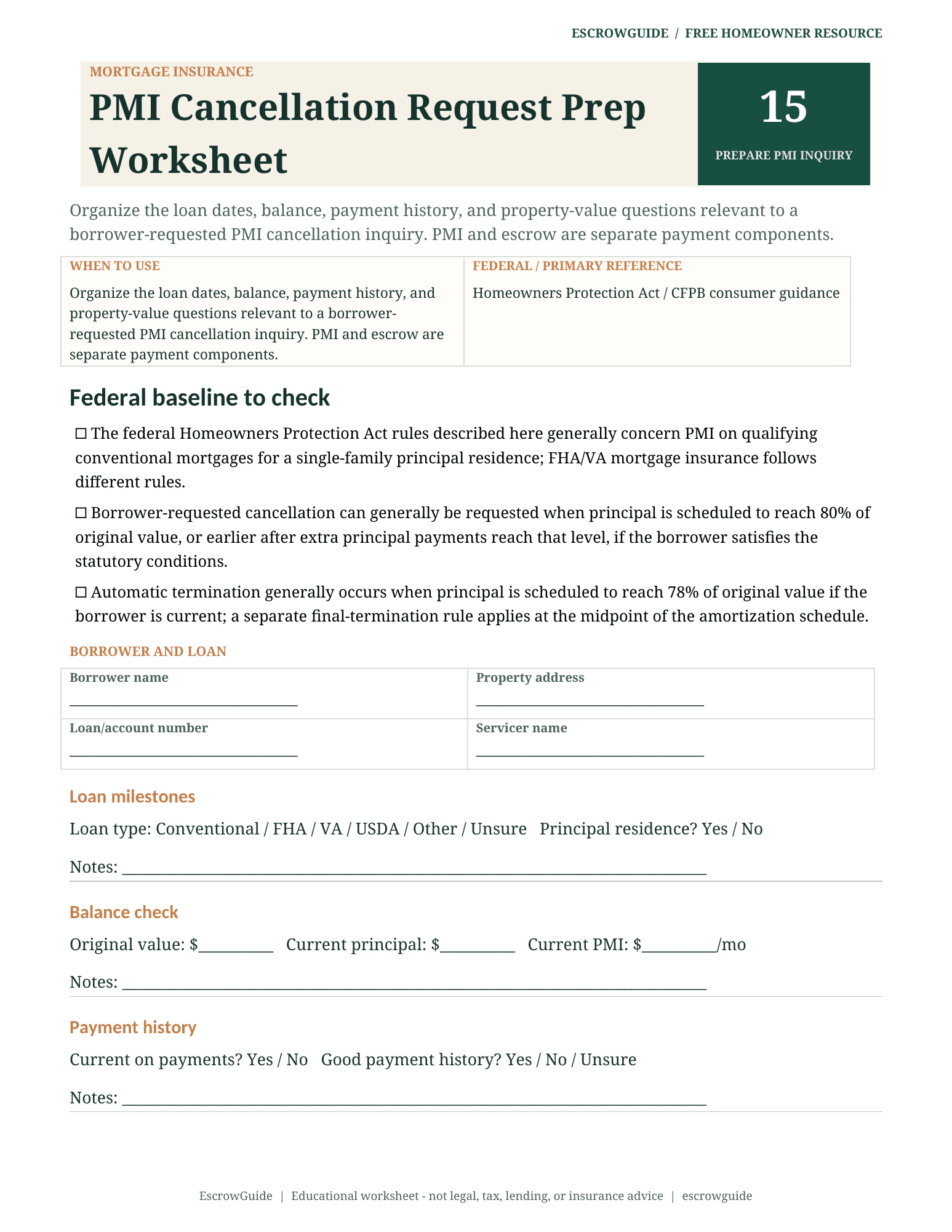
Actual first-page previewPMI Cancellation Request Prep Worksheet
Before you fill it out
What this resource helps you document
Organize the loan dates, balance, payment history, and property-value questions relevant to a borrower-requested PMI cancellation inquiry. PMI and escrow are separate payment components.
01Loan milestones
02Balance check
03Payment history
04Property value / subordinate liens
05Questions for servicer
Federal baseline to check
Use the form with the rule, not instead of the rule.
These templates organize facts and records. They do not create a borrower right that the underlying regulation, loan terms, investor rules, or state law does not provide.
- The federal Homeowners Protection Act rules described here generally concern PMI on qualifying conventional mortgages for a single-family principal residence; FHA/VA mortgage insurance follows different rules.
- Borrower-requested cancellation can generally be requested when principal is scheduled to reach 80% of original value, or earlier after extra principal payments reach that level, if the borrower satisfies the statutory conditions.
- Automatic termination generally occurs when principal is scheduled to reach 78% of original value if the borrower is current; a separate final-termination rule applies at the midpoint of the amortization schedule.
Use this resource carefully
- Do not confuse PMI with escrow. PMI can end while the tax-and-insurance escrow account remains unchanged.
- For borrower-requested cancellation, use the servicer's written process and keep evidence of the request; the servicer may require evidence that property value has not declined below original value.
- For automatic 78% termination, the test is based on the scheduled amortization date, not a borrower-ordered current appraisal; being current still matters.