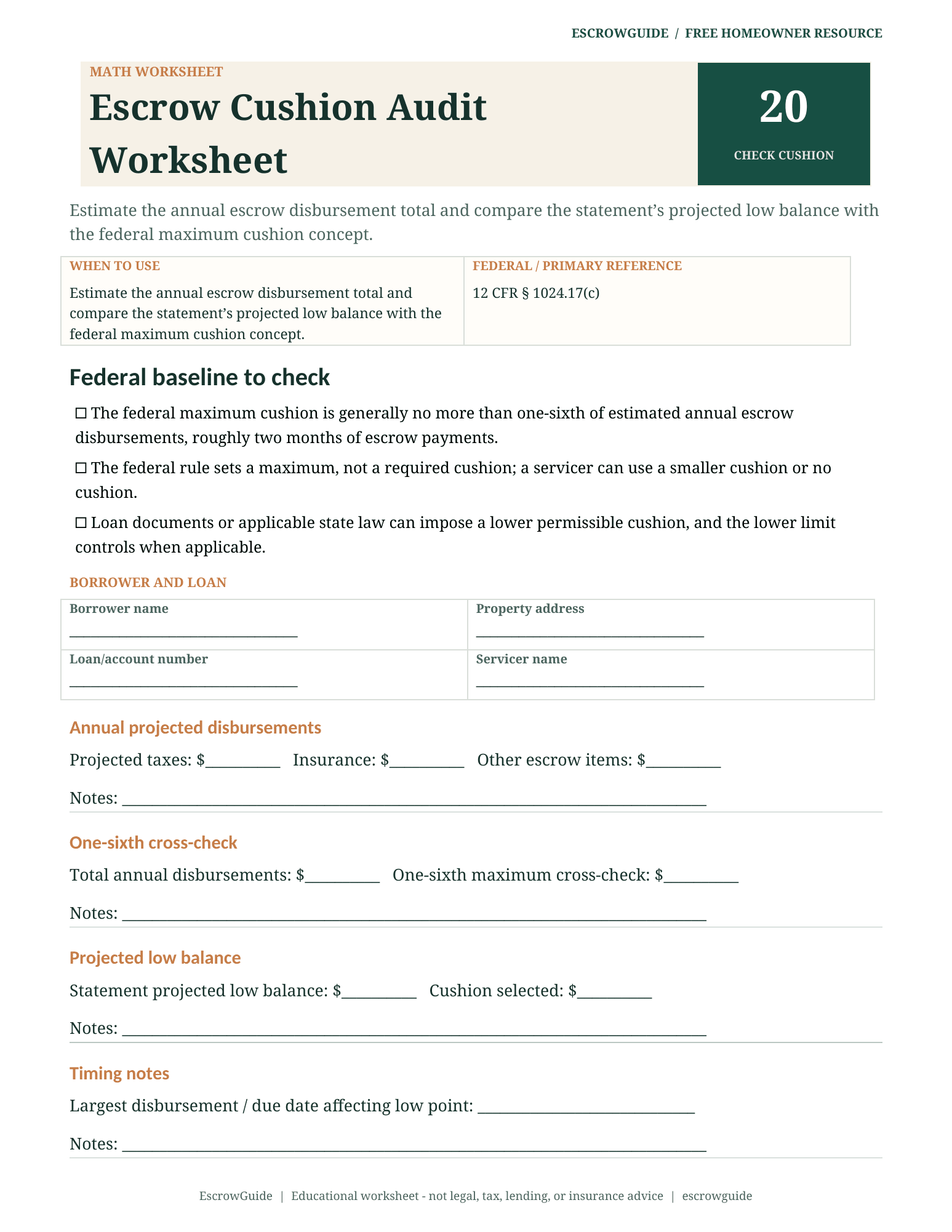
The federal maximum cushion under Regulation X is generally one-sixth of estimated annual escrow disbursements, but the mortgage documents can require a lower cushion and applicable law can also set a lower amount. A servicing transfer does not erase those lower limits. If the new servicer changes the cushion, compare the old and new analyses, the loan documents and the transfer accounting method before assuming the increase is valid.
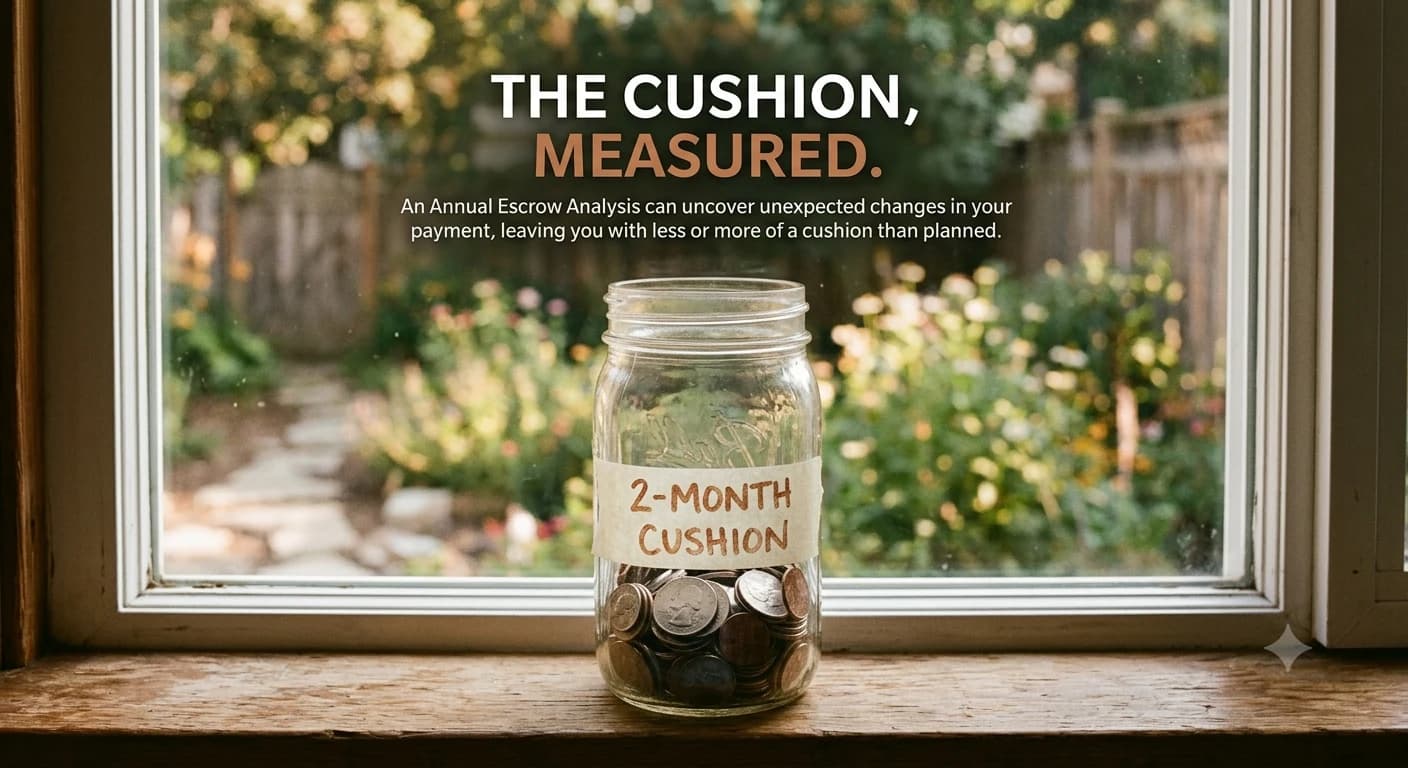
The phrase “two-month cushion” is a ceiling shorthand, not a universal required reserve. One-sixth of annual disbursements is the federal maximum described by Regulation X; a servicer may use less, and the mortgage documents may require less.
Compare the old and new cushion amounts
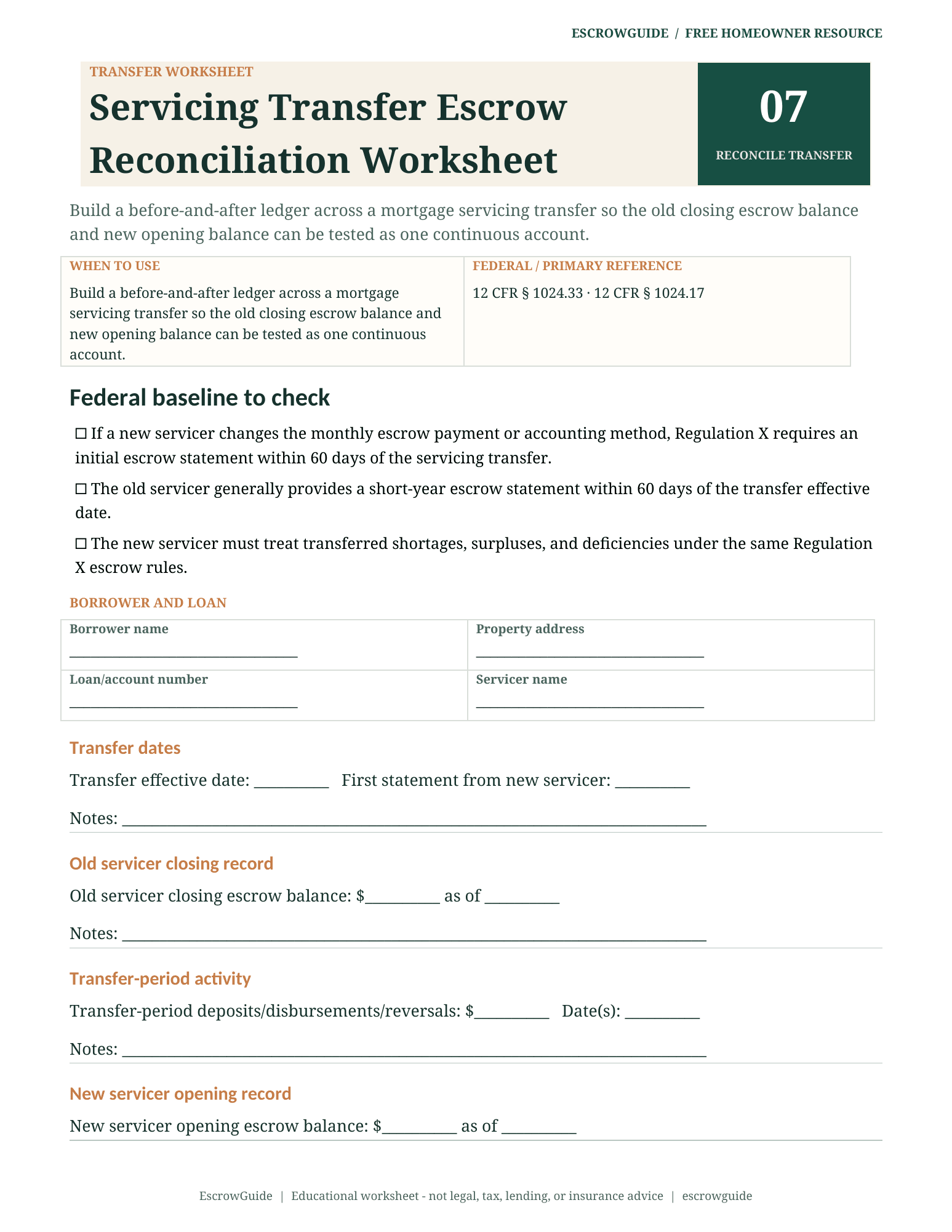
A transfer can legitimately change the escrow computation year in certain circumstances, which changes the trial-balance dates. A different low-balance month can alter the deposit even when the cushion policy is unchanged. Separate a computation-year change from a cushion-size change.
Long-tail question: can new mortgage servicer increase escrow cushion after servicing transfer. The best comparison uses the cushion line or target balance in both analyses, not just the old and new monthly escrow deposits. The deposit can rise because taxes or insurance increased even if the cushion stayed constant.
The rule that controls read the mortgage documents for a lower contractual limit
Section 1024.17(c)(8) requires the servicer to examine the mortgage documents for the applicable cushion. Lower contractual limits control over the federal maximum, and lower applicable federal or state limits may also matter. Transfer rules in § 1024.17(e) determine whether the new servicer keeps the prior payment/accounting method or establishes a different computation year with the required statements.
If the new servicer changed the monthly payment amount or accounting method from the old servicer, Regulation X has an initial-statement rule tied to the transfer. That statement can help identify exactly which assumptions were reset.
Worked example: Calculate one-sixth of the new annual escrow disbursements
The old servicer used a one-month cushion because the mortgage documents cap the reserve at one month. After transfer, the new servicer’s analysis uses two months, increasing the monthly deposit. The federal one-sixth maximum does not answer the dispute because the documents are more restrictive. The borrower should provide the relevant mortgage provision, compare both trial balances and ask the new servicer which cushion authority it applied.
State law can impose lower limits or other escrow requirements. This guide does not attempt a state-by-state legal conclusion; it tells the borrower which documents and figures to gather before researching the applicable state rule.
Account audit from Compare the old and new cushion amounts to Request the exact cushion basis if the analysis cannot be reproduced
Compare the old and new cushion amounts
The phrase “two-month cushion” is a ceiling shorthand, not a universal required reserve. One-sixth of annual disbursements is the federal maximum described by Regulation X; a servicer may use less, and the mortgage documents may require less. Evidence target: Compare the old and new cushion amounts. Next comparison: Read the mortgage documents for a lower contractual limit. Error to avoid: treating two months as a required cushion rather than a maximum.
Read the mortgage documents for a lower contractual limit
A transfer can legitimately change the escrow computation year in certain circumstances, which changes the trial-balance dates. A different low-balance month can alter the deposit even when the cushion policy is unchanged. Separate a computation-year change from a cushion-size change. Evidence target: Read the mortgage documents for a lower contractual limit. Next comparison: Calculate one-sixth of the new annual escrow disbursements. Error to avoid: assuming transfer wipes out a lower contractual limit.
Calculate one-sixth of the new annual escrow disbursements
The best comparison uses the cushion line or target balance in both analyses, not just the old and new monthly escrow deposits. The deposit can rise because taxes or insurance increased even if the cushion stayed constant. Evidence target: Calculate one-sixth of the new annual escrow disbursements. Next comparison: Separate cushion changes from tax or insurance increases. Error to avoid: blaming the cushion for an increase actually caused by higher bills.
Separate cushion changes from tax or insurance increases
If the new servicer changed the monthly payment amount or accounting method from the old servicer, Regulation X has an initial-statement rule tied to the transfer. That statement can help identify exactly which assumptions were reset. Evidence target: Separate cushion changes from tax or insurance increases. Next comparison: Identify whether the computation year changed after transfer. Error to avoid: comparing analyses with different computation years without aligning dates.
Identify whether the computation year changed after transfer
State law can impose lower limits or other escrow requirements. This guide does not attempt a state-by-state legal conclusion; it tells the borrower which documents and figures to gather before researching the applicable state rule. Evidence target: Identify whether the computation year changed after transfer. Next comparison: Check the new servicer initial or short-year statement. Error to avoid: making a state-law claim without checking the applicable jurisdiction.
Check the new servicer initial or short-year statement
A concise written question is stronger than “why did you add two months?” Ask for the cushion amount used, the annual disbursement base used to compute it, the mortgage provision relied on, and the computation-year dates in the new analysis. Evidence target: Check the new servicer initial or short-year statement. Next comparison: Research any applicable lower state-law limit. Error to avoid: treating two months as a required cushion rather than a maximum.
Research any applicable lower state-law limit
The phrase “two-month cushion” is a ceiling shorthand, not a universal required reserve. One-sixth of annual disbursements is the federal maximum described by Regulation X; a servicer may use less, and the mortgage documents may require less. Evidence target: Research any applicable lower state-law limit. Next comparison: Request the exact cushion basis if the analysis cannot be reproduced. Error to avoid: assuming transfer wipes out a lower contractual limit.
Request the exact cushion basis if the analysis cannot be reproduced
A transfer can legitimately change the escrow computation year in certain circumstances, which changes the trial-balance dates. A different low-balance month can alter the deposit even when the cushion policy is unchanged. Separate a computation-year change from a cushion-size change. Evidence target: Request the exact cushion basis if the analysis cannot be reproduced. Next comparison: Compare the old and new cushion amounts. Error to avoid: blaming the cushion for an increase actually caused by higher bills.
Evidence table for “can new mortgage servicer increase escrow cushion after servicing transfer”
| Step | What to verify | Failure mode |
|---|---|---|
| 1 | Compare the old and new cushion amounts | treating two months as a required cushion rather than a maximum |
| 2 | Read the mortgage documents for a lower contractual limit | assuming transfer wipes out a lower contractual limit |
| 3 | Calculate one-sixth of the new annual escrow disbursements | blaming the cushion for an increase actually caused by higher bills |
| 4 | Separate cushion changes from tax or insurance increases | comparing analyses with different computation years without aligning dates |
| 5 | Identify whether the computation year changed after transfer | making a state-law claim without checking the applicable jurisdiction |
| 6 | Check the new servicer initial or short-year statement | treating two months as a required cushion rather than a maximum |
| 7 | Research any applicable lower state-law limit | assuming transfer wipes out a lower contractual limit |
| 8 | Request the exact cushion basis if the analysis cannot be reproduced | blaming the cushion for an increase actually caused by higher bills |
What can change the answer
A concise written question is stronger than “why did you add two months?” Ask for the cushion amount used, the annual disbursement base used to compute it, the mortgage provision relied on, and the computation-year dates in the new analysis.
- treating two months as a required cushion rather than a maximum
- assuming transfer wipes out a lower contractual limit
- blaming the cushion for an increase actually caused by higher bills
- comparing analyses with different computation years without aligning dates
- making a state-law claim without checking the applicable jurisdiction
Compare the old and new cushion amounts — reconciliation note The best comparison uses the cushion line or target balance in both analyses, not just the old and new monthly escrow deposits. The deposit can rise because taxes or insurance increased even if the cushion stayed constant. For this account, pair “Compare the old and new cushion amounts” with “Separate cushion changes from tax or insurance increases” before carrying a dollar figure forward. If the documents do not agree, preserve the variance rather than resolving it by blaming the cushion for an increase actually caused by higher bills.
Primary authority for this servicing question
- CFPB Regulation X — § 1024.17(c)(8), (e) ↗
can new mortgage servicer increase escrow cushion after servicing transfer — use CFPB Regulation X — § 1024.17(c)(8), (e) to verify the federal or investor rule described above; use the borrower’s own statements, bills and transaction history for loan-level facts.
- eCFR — 12 CFR § 1024.17(c)(8), (e) ↗
can new mortgage servicer increase escrow cushion after servicing transfer — use eCFR — 12 CFR § 1024.17(c)(8), (e) to verify the federal or investor rule described above; use the borrower’s own statements, bills and transaction history for loan-level facts.
Scope: this guide explains mortgage-servicing mechanics for can new mortgage servicer increase escrow cushion after servicing transfer. It does not provide personalized legal, tax, insurance-coverage or loan-choice advice. Where local law, mortgage documents or investor rules matter, verify those authorities separately.