A homestead exemption can lower taxable value or otherwise reduce a property-tax bill under state or local law, but the mortgage servicer does not grant the exemption. If the exemption was never filed, was denied, expired, or was not reflected on the bill used for escrow, the tax amount may rise and create a shortage. Start with the tax authority's record, not the servicer.
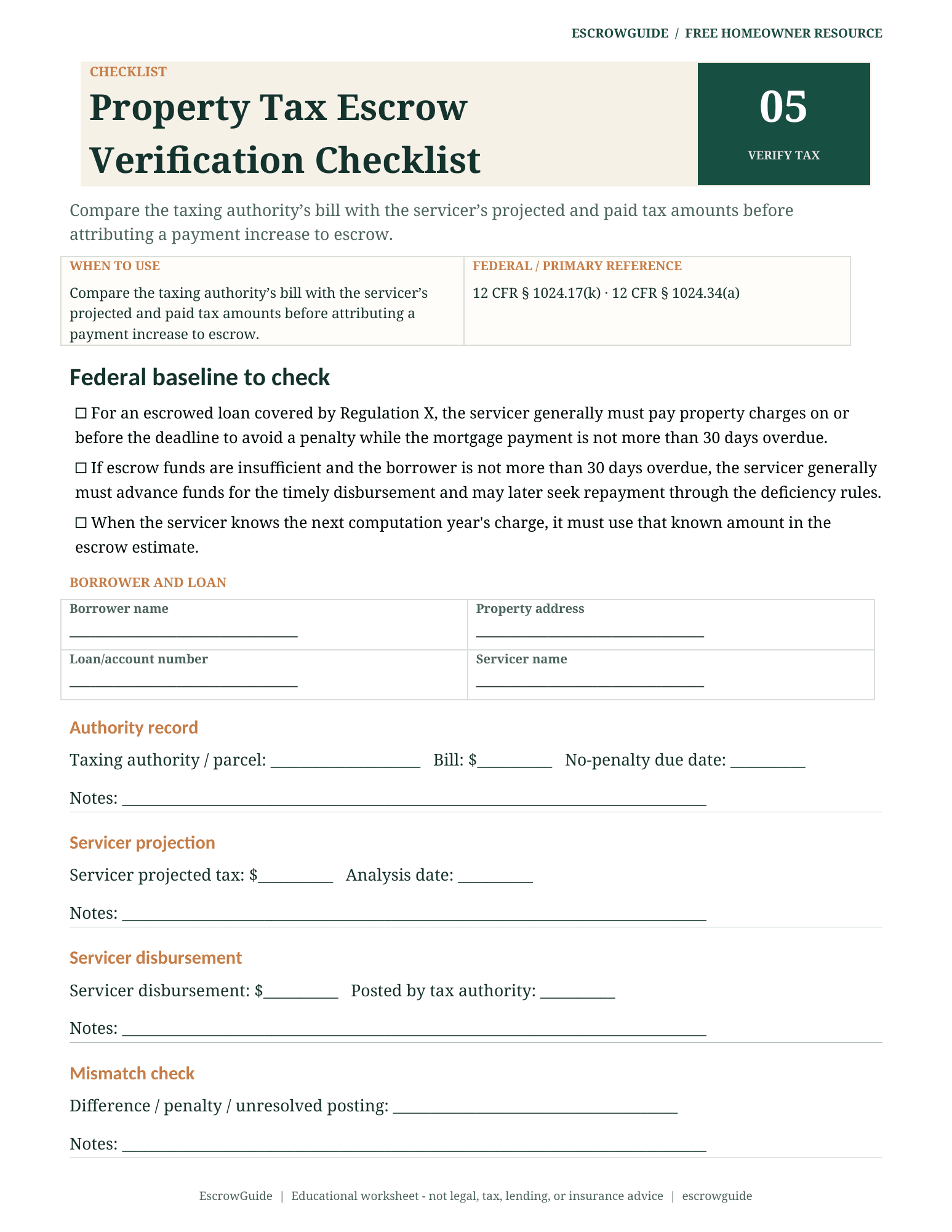
Property-tax amounts come from the taxing authority while the servicer administers collection and disbursement, creating two records that can be compared independently. The point is not to reproduce proprietary servicing software; it is to make every material input traceable.
Read the account in the right order
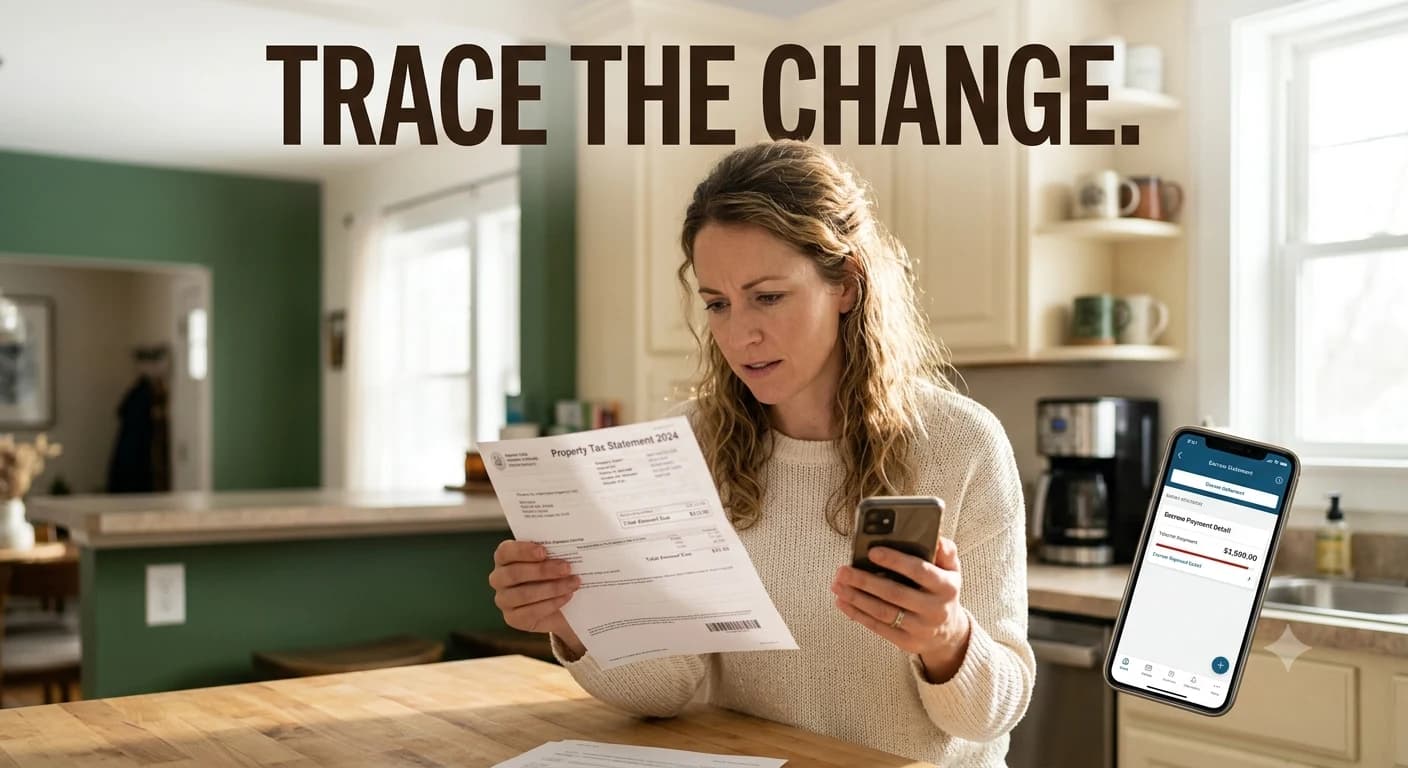
Begin with the event that changed the account, not with the new total. Put consecutive statements side by side and mark principal and interest, the periodic escrow deposit, temporary catch-up, mortgage insurance when relevant, and any other recurring line. For why did a homestead exemption change my mortgage escrow shortage, pair the disputed amount with the record that should control it. Dates matter as much as dollars. A transaction posted a few days before or after the analysis date can explain why a borrower and servicer appear to be starting from different balances.
Where federal servicing rules fit
Regulation X governs how covered servicers analyze and collect escrow; it does not determine whether you qualify for a homestead exemption. Eligibility, filing deadlines, portability, caps, refunds, and corrections come from the relevant state or local tax authority. The servicer generally works from the bills it receives or amounts it reasonably projects.
Scope is part of the diagnosis. A cited federal provision may control timing or escrow treatment while another source controls whether the charge itself is due, how large it is, or whether a loan-specific option exists. Keep copies rather than originals when sending records and retain proof of delivery for formal servicing correspondence. A page-specific cross-check is to look up the parcel on the official assessor or tax collector site.
A concrete scenario
Suppose an exemption reduced last year's tax bill to $4,200, but this year's bill is $6,000 because the exemption is missing. The $1,800 annual difference can increase base escrow by roughly $150 a month. If the servicer already paid the $6,000 bill from an account funded for the lower amount, the annual analysis may also show a shortage.
A worked case is valuable because it forces every dollar into a category. Once the same categories are filled with real statement values, a vague payment complaint becomes a specific difference with a date and amount. A page-specific cross-check is to verify the exemption status, effective year, and owner-occupancy record.
Reconcile the evidence
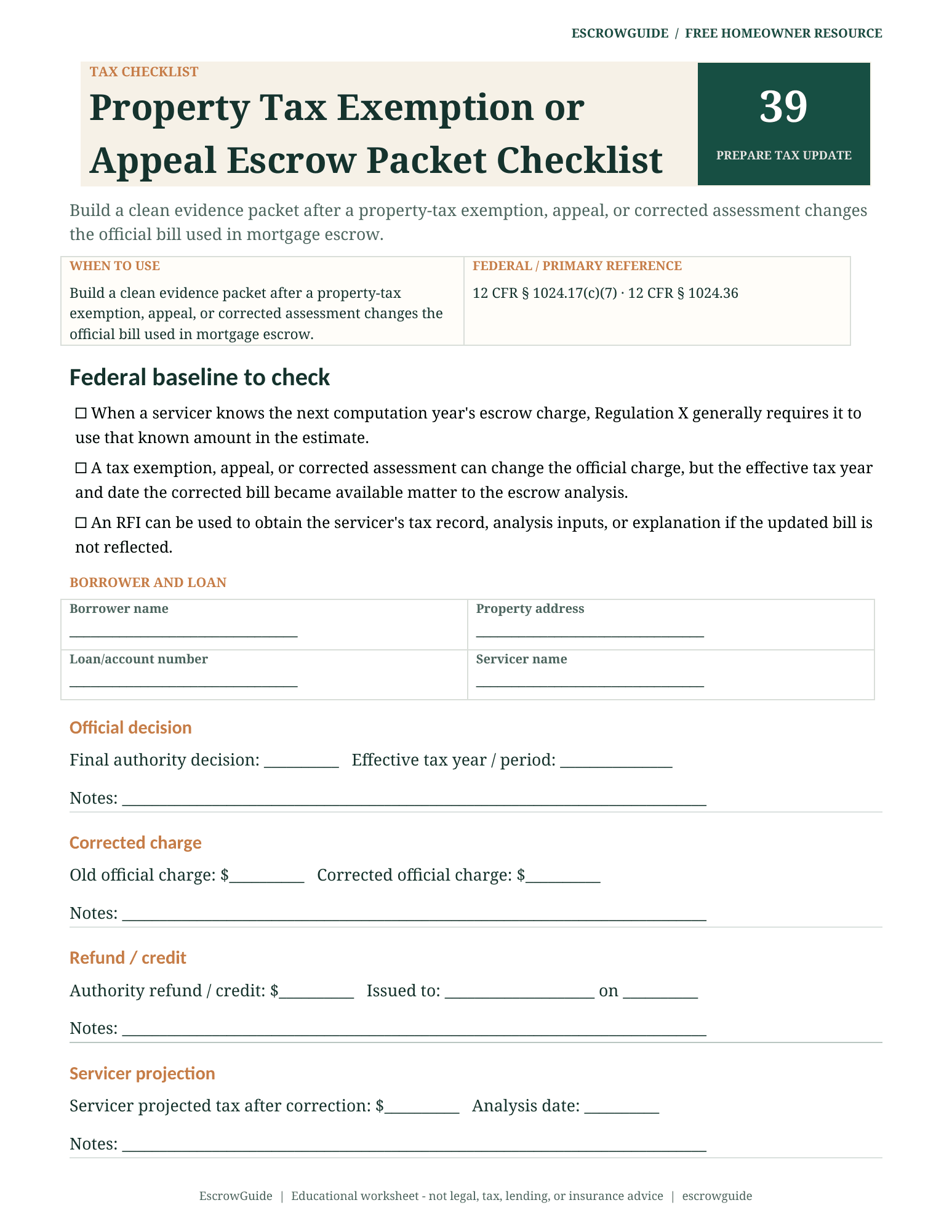
Build a compact evidence packet that a second reader could follow without explanation. Include the statement that introduced the change, the prior comparison point, and the official record that should support the changed amount. A page-specific cross-check is to if the authority corrects the bill, obtain written proof of the corrected amount and any refund.
- Look up the parcel on the official assessor or tax collector site.
- Verify the exemption status, effective year, and owner-occupancy record.
- If the authority corrects the bill, obtain written proof of the corrected amount and any refund.
- Send the correction to the servicer and ask how it will affect the escrow analysis.
- Keep the tax-authority issue and the servicer-accounting issue as two separate tracks.
Turn the checklist into a short timeline. The order of collection, disbursement, analysis and notice dates often explains a balance that looks wrong when only month-end totals are compared. For this issue, also rule out asking the servicer to 'apply' a tax exemption that only the taxing authority can grant.
Finish with a timeline check
Distinguish the amount that is expected to persist from any amount designed to catch up a past imbalance. Recurring tax, insurance or mortgage-insurance costs belong in the first bucket. Shortage or deficiency treatment belongs in the second. Labeling those buckets makes the likely duration of a payment change easier to understand. A page-specific cross-check is to send the correction to the servicer and ask how it will affect the escrow analysis.
For educational estimates, label assumptions explicitly. If a simple annual amount divided by 12 is being used only as a cross-check, it should not be presented as the formal aggregate-accounting result. That distinction keeps a useful estimate from becoming false evidence of servicing error. For this issue, also rule out assuming an exemption transfers automatically after a purchase.
Do not force every issue into an escrow remedy. Sometimes the escrow ledger accurately reflects an underlying bill that the homeowner disputes for a separate reason. In that case, the servicing audit can confirm the math while the underlying tax, insurance or program question continues through its own channel. A page-specific cross-check is to keep the tax-authority issue and the servicer-accounting issue as two separate tracks.
Common false signals
- Asking the servicer to 'apply' a tax exemption that only the taxing authority can grant.
- Assuming an exemption transfers automatically after a purchase.
- Using rules from another state or county.
- Expecting a corrected tax bill to change the mortgage payment instantly before the servicer receives and processes it.
Avoid treating a calculator disagreement as the error itself. Simplified estimates do not capture every running-balance timing rule, while an identified wrong bill or posting is a concrete fact the servicer can investigate. A page-specific cross-check is to look up the parcel on the official assessor or tax collector site.
If the ledger still does not tie
If the call center cannot reconcile the account, convert the timeline into a written question. Regulation X has procedures for certain servicing errors and information requests, but the submission should still be anchored to concrete account facts. A page-specific cross-check is to verify the exemption status, effective year, and owner-occupancy record.
The site can explain the mechanism and source framework, but it cannot determine the legal consequence for an individual loan. Keep required-payment decisions outside a general article unless the controlling loan-specific source is clear. For this issue, also rule out using rules from another state or county.
Close the loop on the following statement
A resolved phone call is not the end of the audit until the transaction history reflects the resolution. Look for the promised credit, reversal, transfer entry or revised projection, then keep the statement that proves it posted. That closes the evidence loop without relying on memory. A page-specific cross-check is to if the authority corrects the bill, obtain written proof of the corrected amount and any refund.
For large changes, keep a simple spreadsheet with one row per material transaction and columns for source, expected amount, posted amount and date. The tool is not evidence by itself, but it makes missing or duplicate entries obvious and points back to the source documents that are evidence. For this issue, also rule out expecting a corrected tax bill to change the mortgage payment instantly before the servicer receives and processes it.