Dispute letter · Free download
Escrow Analysis Dispute Letter
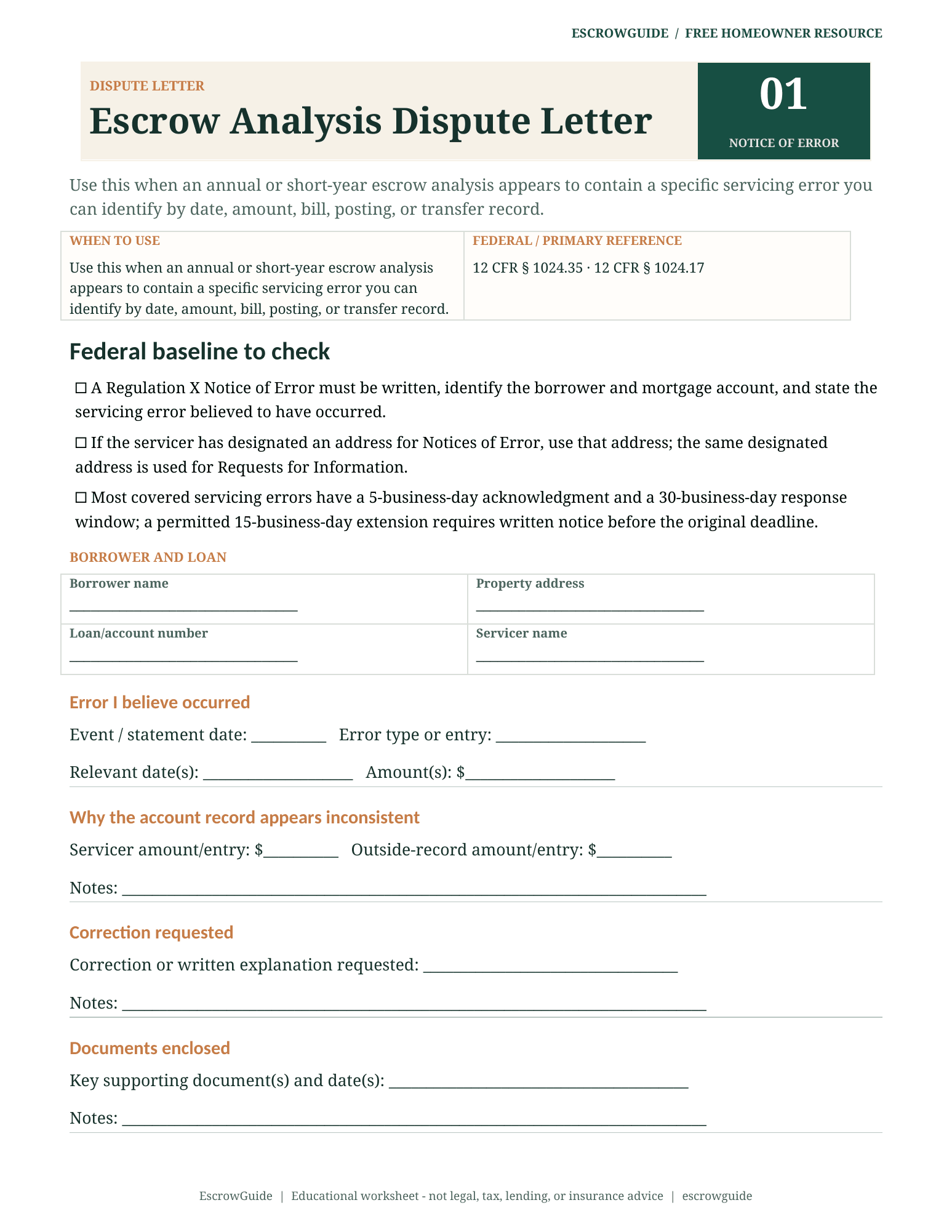
Use this when an annual or short-year escrow analysis appears to contain a specific servicing error you can identify by date, amount, bill, posting, or transfer record.
2 pagesNo email requiredEditable + printable
Actual first-page previewEscrow Analysis Dispute Letter
Before you fill it out
What this resource helps you document
Use this when an annual or short-year escrow analysis appears to contain a specific servicing error you can identify by date, amount, bill, posting, or transfer record.
01Error I believe occurred
02Why the account record appears inconsistent
03Correction requested
04Documents enclosed
Federal baseline to check
Use the form with the rule, not instead of the rule.
These templates organize facts and records. They do not create a borrower right that the underlying regulation, loan terms, investor rules, or state law does not provide.
- A Regulation X Notice of Error must be written, identify the borrower and mortgage account, and state the servicing error believed to have occurred.
- If the servicer has designated an address for Notices of Error, use that address; the same designated address is used for Requests for Information.
- Most covered servicing errors have a 5-business-day acknowledgment and a 30-business-day response window; a permitted 15-business-day extension requires written notice before the original deadline.
Use this resource carefully
- Describe a servicing error, not an origination, underwriting, or loan-sale complaint. Tie each allegation to a date, amount, transaction, bill, or missing record.
- If the servicer says no error occurred, you may separately request the documents it actually relied on; Regulation X generally gives 15 business days for those documents after the request.
- Continue making scheduled mortgage payments unless your servicer or a qualified adviser tells you otherwise; sending an NOE does not itself suspend payment obligations.