Tracker · Free download
Escrow Shortage Payment Tracker
Track a shortage repayment separately from the recurring tax-and-insurance escrow deposit so the temporary catch-up does not get confused with the permanent payment level.
2 pagesNo email requiredEditable + printable
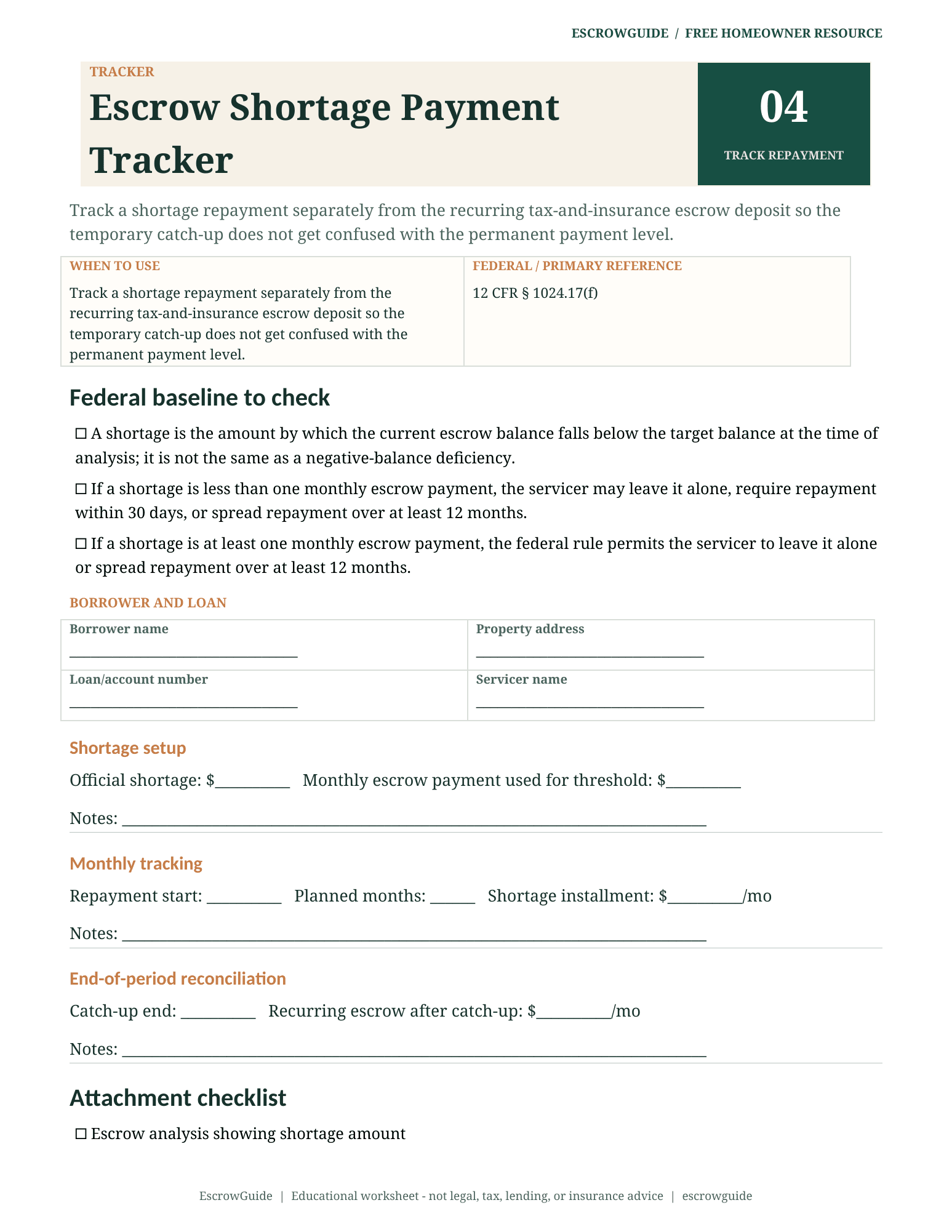
Actual first-page previewEscrow Shortage Payment Tracker
Before you fill it out
What this resource helps you document
Track a shortage repayment separately from the recurring tax-and-insurance escrow deposit so the temporary catch-up does not get confused with the permanent payment level.
01Shortage setup
02Monthly tracking
03End-of-period reconciliation
Federal baseline to check
Use the form with the rule, not instead of the rule.
These templates organize facts and records. They do not create a borrower right that the underlying regulation, loan terms, investor rules, or state law does not provide.
- A shortage is the amount by which the current escrow balance falls below the target balance at the time of analysis; it is not the same as a negative-balance deficiency.
- If a shortage is less than one monthly escrow payment, the servicer may leave it alone, require repayment within 30 days, or spread repayment over at least 12 months.
- If a shortage is at least one monthly escrow payment, the federal rule permits the servicer to leave it alone or spread repayment over at least 12 months.
Use this resource carefully
- Track the shortage catch-up separately from the new recurring escrow deposit. Paying the shortage does not erase a tax or insurance increase built into the new recurring amount.
- Use the repayment term actually shown by the servicer; a lump-sum payoff is not a federal entitlement for every shortage size.
- After the catch-up period ends, verify that the temporary shortage component disappears from the total payment when expected.