Hardship worksheet · Free download
Post-Forbearance Escrow Reconciliation Worksheet
Track taxes and insurance paid during a forbearance period and reconcile those disbursements with later escrow shortage or deficiency treatment.
2 pagesNo email requiredEditable + printable
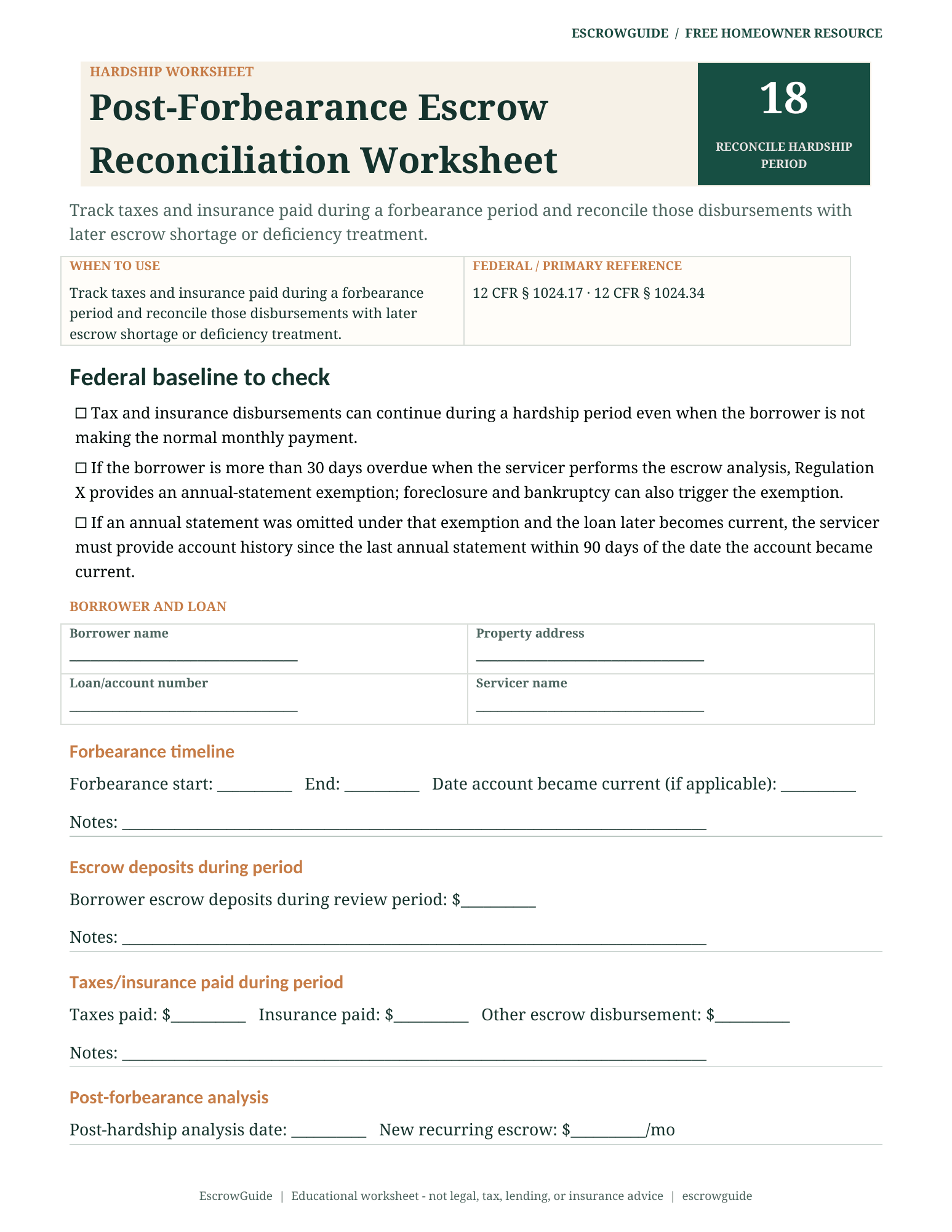
Actual first-page previewPost-Forbearance Escrow Reconciliation Worksheet
Before you fill it out
What this resource helps you document
Track taxes and insurance paid during a forbearance period and reconcile those disbursements with later escrow shortage or deficiency treatment.
01Forbearance timeline
02Escrow deposits during period
03Taxes/insurance paid during period
04Post-forbearance analysis
05Balance to explain
Federal baseline to check
Use the form with the rule, not instead of the rule.
These templates organize facts and records. They do not create a borrower right that the underlying regulation, loan terms, investor rules, or state law does not provide.
- Tax and insurance disbursements can continue during a hardship period even when the borrower is not making the normal monthly payment.
- If the borrower is more than 30 days overdue when the servicer performs the escrow analysis, Regulation X provides an annual-statement exemption; foreclosure and bankruptcy can also trigger the exemption.
- If an annual statement was omitted under that exemption and the loan later becomes current, the servicer must provide account history since the last annual statement within 90 days of the date the account became current.
Use this resource carefully
- Separate missed borrower escrow deposits from actual tax/insurance advances; both can affect the post-forbearance balance but they are different ledger events.
- Record the date the account became current after hardship, because that date matters for the 90-day account-history requirement when the annual-statement exemption applied.
- Do not assume the forbearance agreement itself waived escrow shortages or deficiencies unless it expressly says so.